Illich Ivan
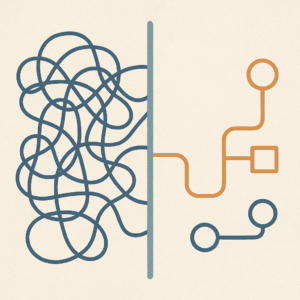
In the shadow of industrial giants, the individual becomes a mere cog, stripped of agency and choice. Radical monopolies, those overefficient tools of modernity, impose a singular path, leading to a society of prisoners of welfare, where dependency replaces competence. This monopoly over land and resources creates a radical scarcity of personal service, as individuals are coerced into consuming what they do not need, fostering a passive society.
Illich Ivan might argue that the very efficiency of these monopolies is their most insidious trait, as they seamlessly integrate into daily life, rendering alternatives invisible. The consequence is a world where personal agency is not just diminished but systematically dismantled. In such a landscape, the conviviality that arises from decentralized power and personal choice is but a distant memory.
To reclaim autonomy, we must challenge these monopolies by nurturing local, small-scale production that champions personal competence and freedom. Only then can we dismantle the illusion of necessity that monopolies craft, and restore the balance between human ingenuity and nature’s bounty. In this pursuit, the struggle between centralized control and individual empowerment becomes not just a battle, but a moral imperative.
Graeber David
Monopoly, often perceived as a mere board game, serves as a stark metaphor for the consolidation of economic control. Historically, the monopoly on banknote issuance has been a tool wielded by states to assert dominance over the financial landscape, transforming currency from metal to paper and, in doing so, reshaping the very nature of trade. This transformation is not merely a technical evolution but a profound shift in the interplay between state power and market dynamics. The perception of markets as natural phenomena is a convenient myth, perpetuated to obscure the deliberate construction of economic systems that favor the few.
Speculative bubbles, those ephemeral castles built on the sands of unregulated finance, are not anomalies but rather the inevitable offspring of unchecked monopolistic practices. They reveal the tension between the illusion of market freedom and the reality of state regulation—or lack thereof. In this context, the historical context of debt emerges as a societal specter, haunting communities with the weight of obligations that transcend generations.
As Graeber might assert, the true currency of our age is not money but the power to define what money is. To dismantle the monopoly’s grip, we must foster critical discussions on the nature of money and value, encouraging community-based financial practices that prioritize collective well-being over individual gain.
Smith Adam
Monopolies, by their very nature, distort market dynamics, creating an economic landscape where the natural distribution of resources is hindered. This distortion is not merely a theoretical concern but a palpable reality that impacts the wealth of nations. When trade restrictions are imposed to benefit select merchants, the broader economic health suffers, creating an illusion of general interest that masks the true beneficiaries. The balance of trade, a delicate equilibrium, is thus disrupted, leading to a concentration of wealth that serves the few at the expense of the many.
In the realm of foreign trade, monopolies limit the diversity of commodities exchanged, thereby stifling potential wealth generation. This limitation not only constrains the market but also repels capital that might otherwise flow into more competitive and open environments. It is imperative, therefore, to encourage free trade, which invigorates competition and fosters economic growth.
As Smith once remarked, “The invisible hand of the market is shackled by the visible hand of monopoly.” This sentiment underscores the tension between monopolistic practices and the principles of a free market, urging a reassessment of policies that prioritize the general welfare over narrow merchant interests. Only through such critical examination can true economic prosperity be achieved.
Weber Max
In the annals of economic history, the monopoly stands as a formidable specter, casting long shadows over the aspirations of free trade and middle-class entrepreneurship. The bitter struggle against monopolists is not merely a tale of economic dominance but a profound ethical confrontation. Historically, trade privileges granted to a select few have stifled the dynamism that arises from competitive markets, breeding a public opinion’s hostility to monopolies. This hostility is not unfounded; it is rooted in a mistrust of capital and speculation that often accompanies monopolistic practices.
The ethical implications of capitalism, particularly when monopolistic tendencies are left unchecked, are profound. They challenge the very essence of labor’s meaning, reducing it to a mere cog in the vast machinery of profit. Herein lies the paradox: capitalism, which promises individual economic freedom, often births entities that curtail it. Religious movements have historically critiqued this, advocating for a return to ethical considerations in economic practices.
As Weber Max might assert, “The monopoly is capitalism’s own Frankenstein, a creation that threatens to consume its creator.” To dismantle these barriers, economic reforms must champion the cause of the middle class, fostering an environment where entrepreneurship thrives unfettered by the chains of monopolistic control.
Ostrom Elinor
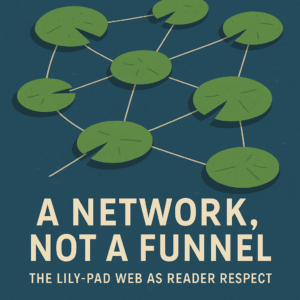
Monopoly, with its singular grip, often suffocates the fertile ground where innovation might otherwise flourish. In contrast, polycentric governance structures provide a dynamic framework that encourages diverse participation and adaptability. This multiplicity of centers fosters an environment where bargaining power is distributed more equitably among stakeholders, thus enhancing resource management. Consider a community managing a shared water resource: when decisions are made collectively, drawing on local knowledge and diverse perspectives, the outcomes are more sustainable and equitable.
The image of polycentric relationships reveals a tapestry of interconnected nodes, each contributing to the resilience of the whole. Monopoly, however, centralizes control, often ignoring the nuanced needs of local contexts. By encouraging diverse suppliers, communities can mitigate the risks associated with monopolistic dominance, ensuring that no single entity wields disproportionate influence over essential resources.
As I have often argued, “The key to effective resource management lies not in the concentration of power, but in the cooperative engagement of all stakeholders.” This approach not only democratizes decision-making but also fortifies the system against the inherent vulnerabilities of monopoly. In essence, fostering cooperation and diversity in governance structures is crucial for thriving, innovative ecosystems.
Blended Draft
Monopoly is not merely market dominance. It is the colonization of imagination—the slow erasure of alternatives until dependency feels like nature.
Ivan Illich names this radical monopoly: not a company cornering a sector, but a system becoming so embedded that other paths disappear. The car reshapes cities until walking seems impractical. The hospital monopolizes the definition of health until self-care seems irresponsible. Individuals become “prisoners of welfare,” coerced into consuming what they do not need because the infrastructure no longer supports what they might otherwise choose. The insidious trait is seamlessness—resistance feels not just difficult but absurd.
David Graeber extends this into finance. The state’s monopoly on currency is not technical plumbing but a restructuring of power. “The true currency of our age is not money but the power to define what money is.” Speculative bubbles are not anomalies but inevitable offspring of unchecked monopolistic finance, revealing the tension between the illusion of market freedom and the reality of state-enabled concentration. (See also: On Debt)
Adam Smith—often misread as blessing concentration—was a sharp critic. His invisible hand described coordination in competitive markets; monopolies shackle it. Trade restrictions benefit select merchants while broader economic health suffers. The balance of trade becomes polite fiction masking extraction. Smith’s prescription: remove artificial barriers that protect incumbents from competition.
Max Weber frames monopoly as ethical confrontation. Trade privileges stifle dynamism and breed public hostility rooted in lived exclusion. Capitalism promises individual freedom yet births entities that curtail it. “The monopoly is capitalism’s own Frankenstein.” Reform must champion the middle class and small enterprise—not nostalgia, but structural intervention.
Elinor Ostrom provides the constructive alternative. Where monopoly centralizes, polycentric governance distributes. Her research proved communities can manage shared resources without privatization or state control—through distributed decision-making, local knowledge, overlapping accountability. Resilience comes from redundancy, not efficiency. When one node fails, others compensate.
The tension: Illich and Graeber emphasize imaginative and definitional capture—how monopolies colonize categories, not just markets. Smith and Weber stress structural and ethical distortion—warped incentives, extracted wealth, betrayed promises. Ostrom offers the governance framework bridging both. Dismantling monopoly requires structural reform and grassroots reconstruction, held together by institutions that make alternatives viable.
Decision Rules:
Name the monopoly on imagination. The most dangerous monopolies don’t corner markets—they make alternatives feel impossible. Visibility is the first step toward contestability.
Build the door before the maze closes. Nurture distributed alternatives—local production, community finance, polycentric governance—before dependency becomes total. Resilience comes from redundancy, not efficiency.
Lineage: This “On Monopoly” essay drew inspiration from the works of:
- Illich Ivan
- Graeber David
- Smith Adam
- Weber Max
- Ostrom Elinor